DEFINING THE ADVISOR EXPERIENCE THROUGH A SINGLE PLATFORM
I was tasked to develop a vision and strategy for one of Northwestern Mutual’s key business portfolios primarily used by their financial advisors. This portfolio and accompanying platforms and applications are the powerhouse behind Northwestern Mutual servicing its customers with insurance and investment products.
Newly recruited and existing financial representatives face a steep learning curve. On top of the complexities of learning financial planning, insurance, and investing, they face antiquated technology. For onboarding and professional growth, we uncovered over 30 tools and services to train them. For growing and managing their practice, we uncovered many more. Unfortunately, each one was created to address one specific pain point. None spoke to each other and ultimately the biggest pain point was the chaotic landscape of products and training tools. By 2018, the company faced an incredible 91% attrition rate of representatives in the first five years; 89% of new recruits would quit during the onboarding process.
Our primary goal was to create a cohesive platform vision that integrated with the digital platform we were designing, NM Connect. By integrating all training and practice management tools into a modern experience we sought to increase retention, improve business growth and shared services, increase proficiency, and reduce tech debt.
Over several months, I led a series of design thinking and strategy workshops, stakeholder interviews, creative problem-solving workshops, and design work to produce a vision for the portfolio that articulated a ‘true north’ direction and create a competitive advantage for the business.
MY ROLE
Service Design, Product Design, Research, Design Strategy, Business Design, Innovation Training
THE TEAM
Phil Robinson (Design Director), Erica Kreindel (Research Lead), Natalia Lavric (ADCS), Eric Mickschl (Visual Lead)
To comply with my non-disclosure agreement, I have omitted confidential information in this case study. The information in this case study is my own and does not necessarily reflect the views of the client.
KICK OFF. CHARTING A PATH TO SUCCESS
At the outset of the project, there weren’t specific goals or objectives for the vision and the outputs that might support it. We had a rough idea of where wanted to get to in terms of deliverables but didn’t know exactly how we’d get there. I partnered with portfolio directors and research leads exploring what existing artifacts I could leverage in order to understand what I was working with. From here, I mapped out the project plan, timelines, deliverables, and key milestones.

CO-CREATION WORKSHOP
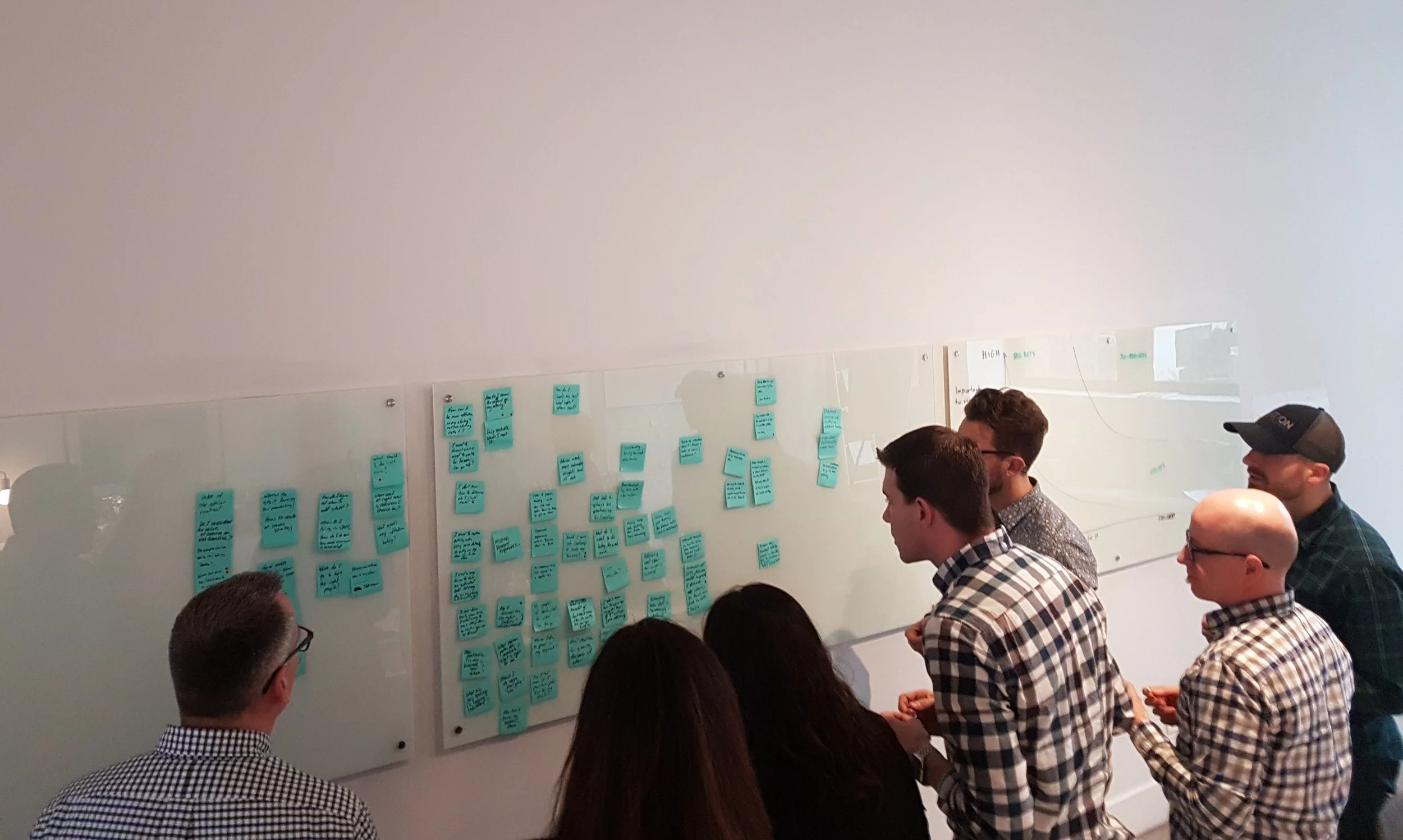
In a group alone format, we used creative problem-solving techniques to diverge and converge on problems and solutions that were to be the focus of the vision.
EARLY INSIGHTS & SYNTHESIS
The outcome of my preliminary workshops and research showed that by helping advisors run their business with smart self-service and financial management tools we could better position them for growth and success, ensuring Northwestern Mutual will be their partner of choice.
Every UX and visual design decision was made with this in mind — and was viewed through the lens of enabling advisors with a smart workspace that knows them, their business, evolves with them every step of the way, and positions them for success. It was my intention that the Vision should naturally adapt to the way you work and your maturity as an advisor, whilst remaining easy-to-use, smart, anticipatory, and work seamlessly with the broader ecosystem.
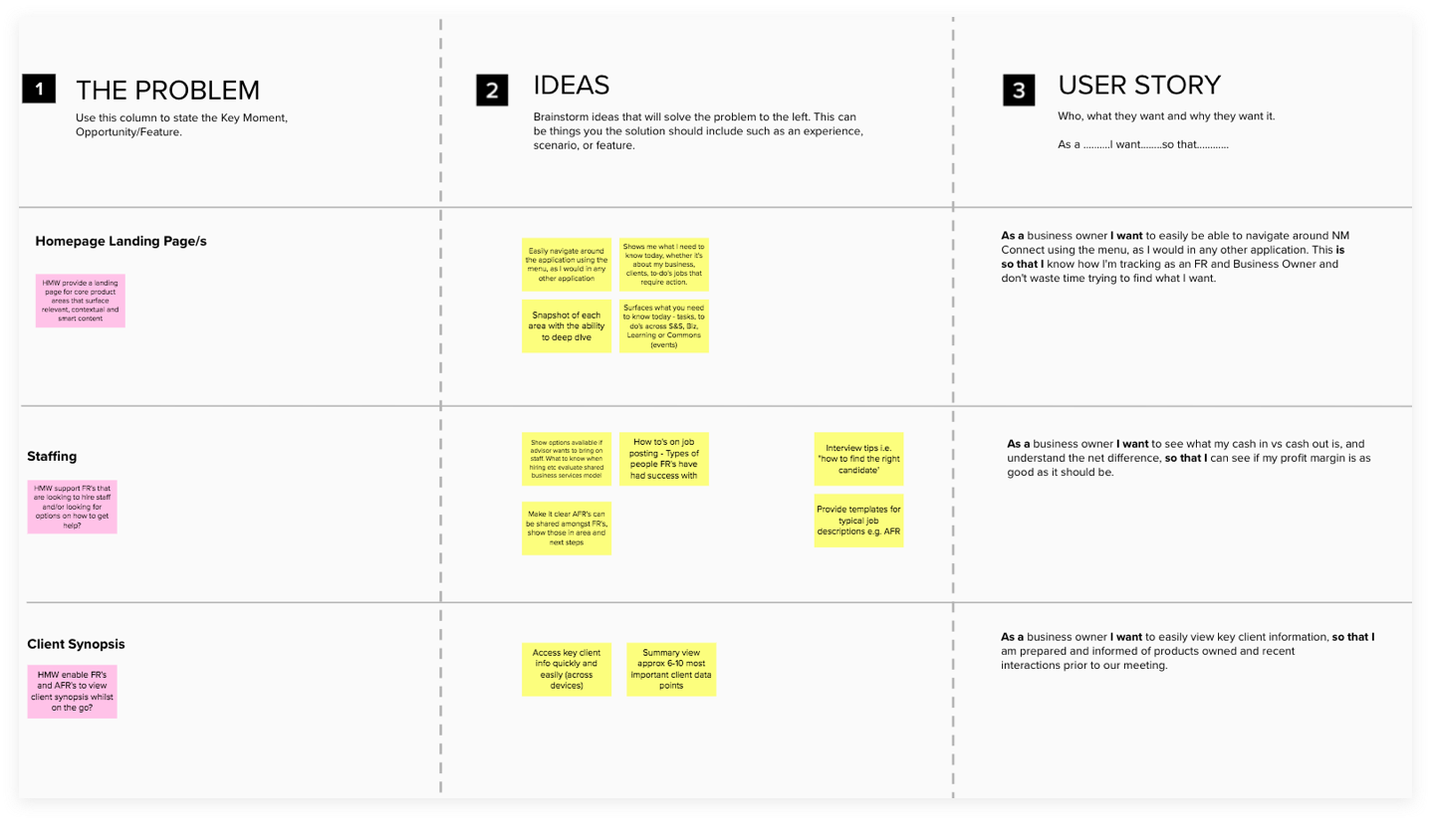
Online collaboration workspace for remote team members and online workshop activities
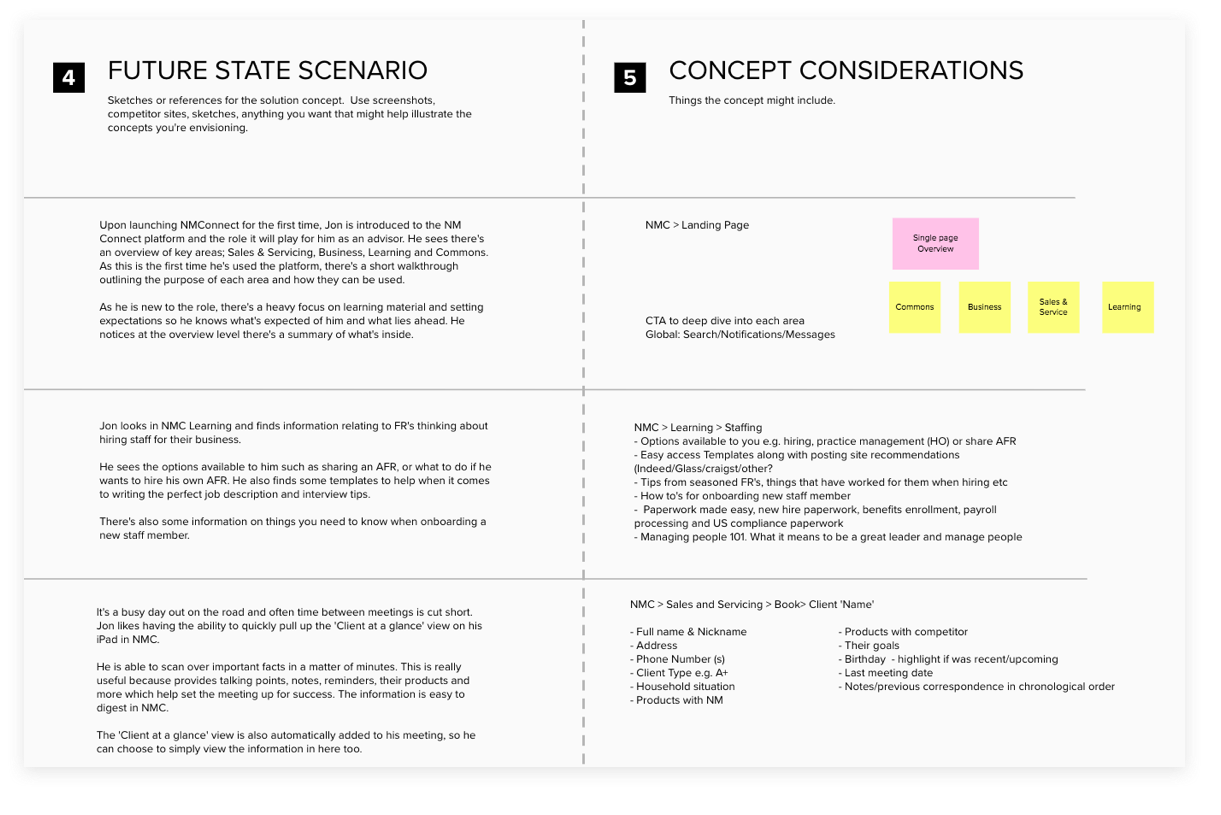
Mapping problems and user stories, articulating how designs will solve key user challenges
UNDERSTANDING & MAPPING THE CURRENT STATE
When crafting the vision, it was crucial to be cognizant of two things in particular; how the vision will fit within the broader product ecosystem and how this work will ladder up to the strategic objectives of each portfolio and company vision. I applied systems thinking approach, with the aim to understand the interdependencies of the applications used.
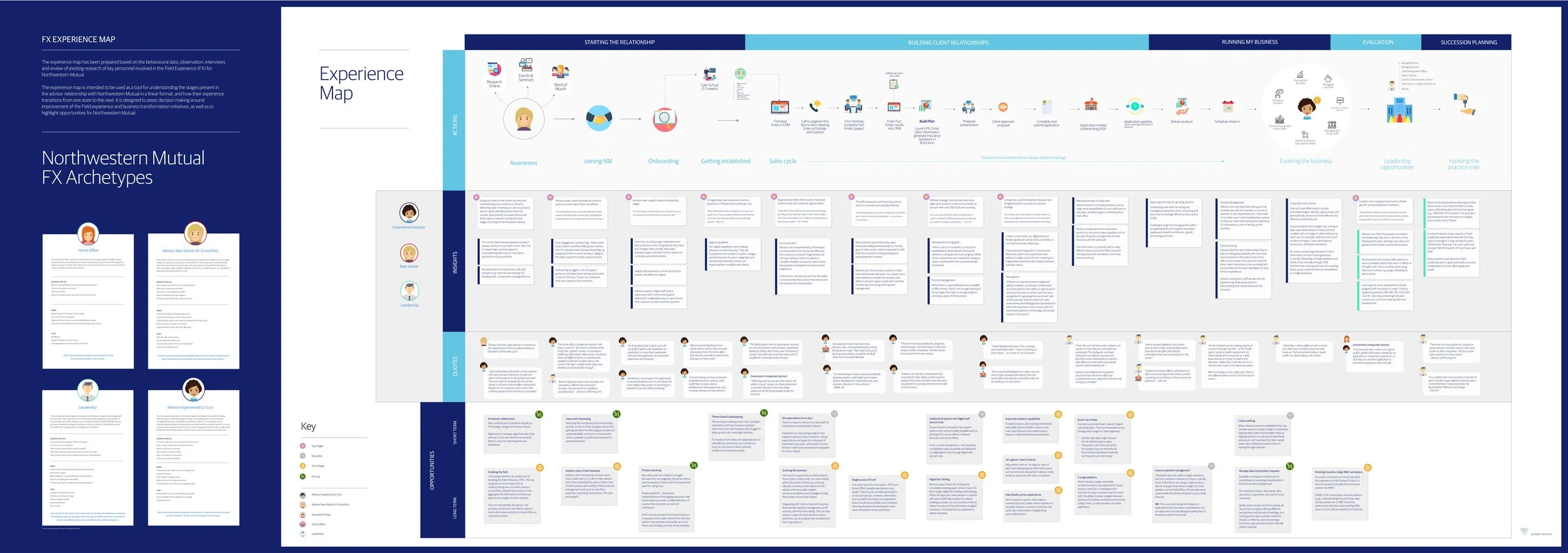
Mapping the “as is” customer journey. Visualizing the current journey helped identify business opportunities for new product/service experiences
FORMAL TRAINING ON HOW TO BECOME PROFITABLE BUSINESS OWNERS WILL INCREASE ADVISOR DEVELOPMENT, PRODUCTIVITY, AND INCREASE RETENTION OF NEW ADVISORS.
IDEATION WORKSHOPS
I led design thinking workshops with business partners and the product team to ensure we had a shared understanding of who we’re designing for and the core problems to be solved. Once this was established, we used creative problem-solving activities and divergent/convergent thinking to note and vote, synthesize and develop future state scenarios.
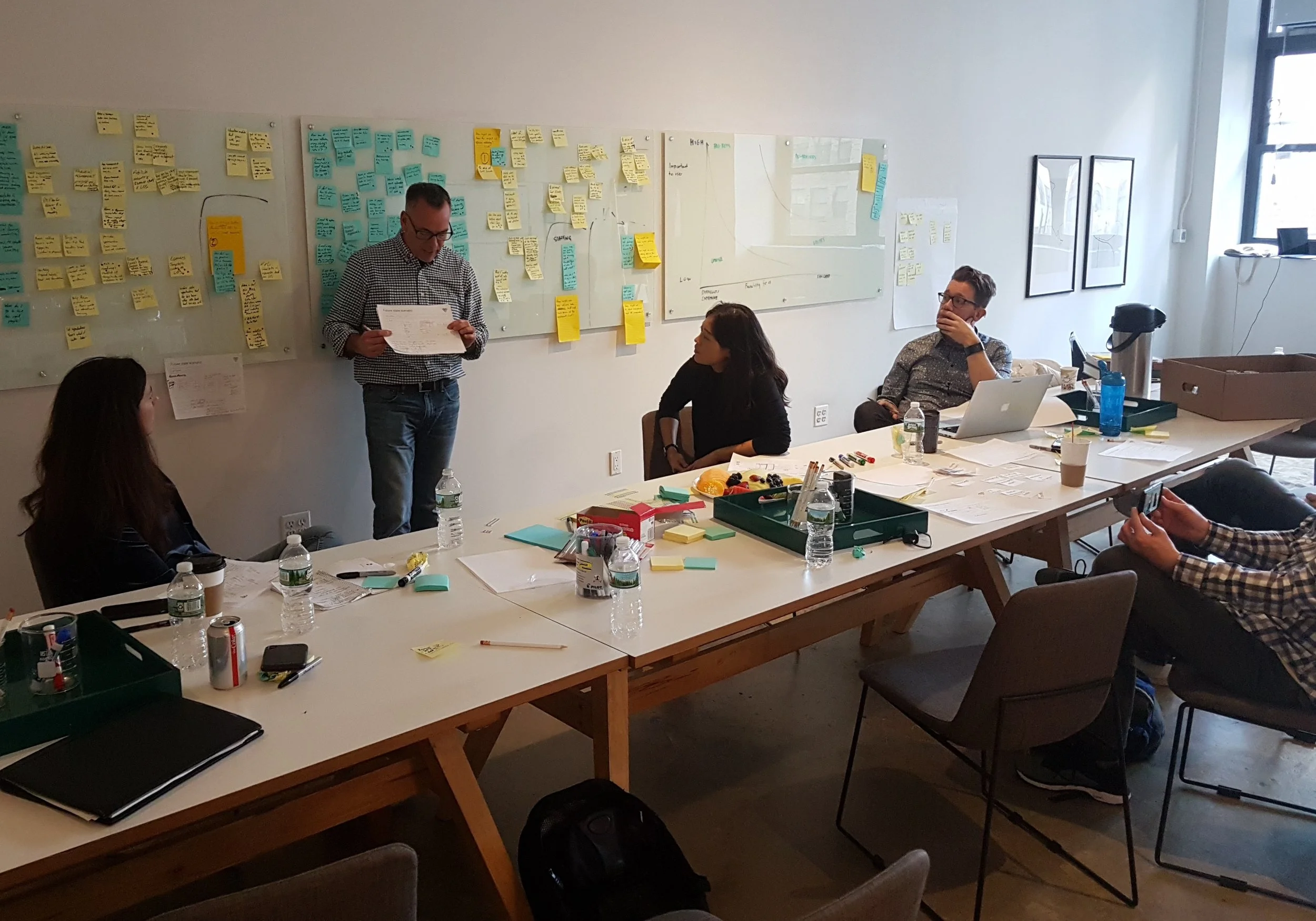
Working through pain points, ideas, and future state scenarios. Note and vote methods ensured ideas were visible and understood by all participants
STORYBOARDS, SCENARIOS, AND PROTOTYPING
Using future state scenarios from ideation workshops, I then gathered the team to sketch the scenarios and present them back to the group. Ideas flowed and patterns emerged. From here, I consolidated and moved into Sketch App to add some fidelity. Progress was shared through Invision so we could track iterations and make sure we were aligned on a direction.
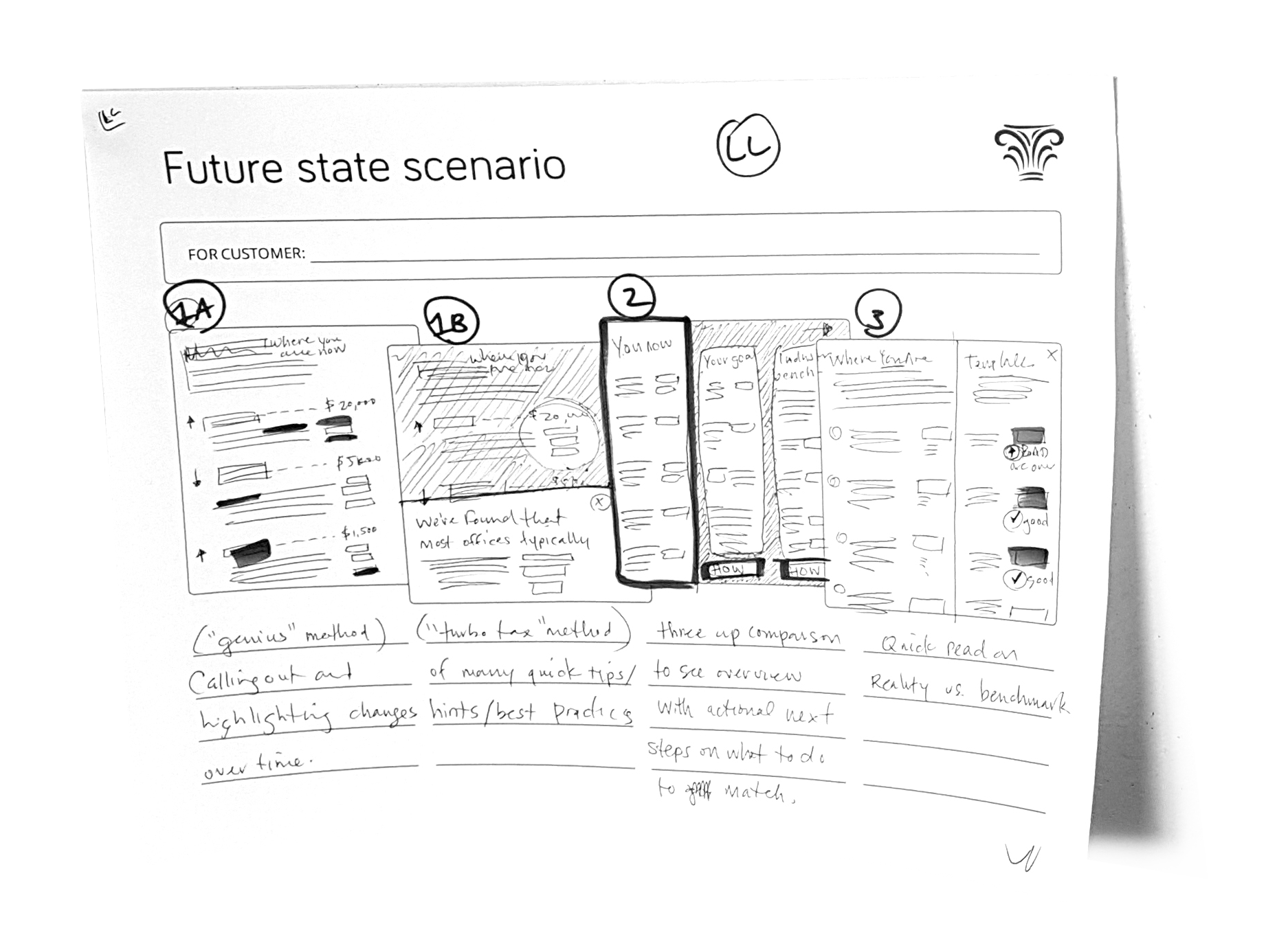
Using future state scenarios from ideation workshops, I gathered the core project team together to sketch scenarios as page flows and start to think about what the experience could like in more detail.
Page flow sketches from our workshop. Sketches were used to iterate and understand intent before moving to Sketch.
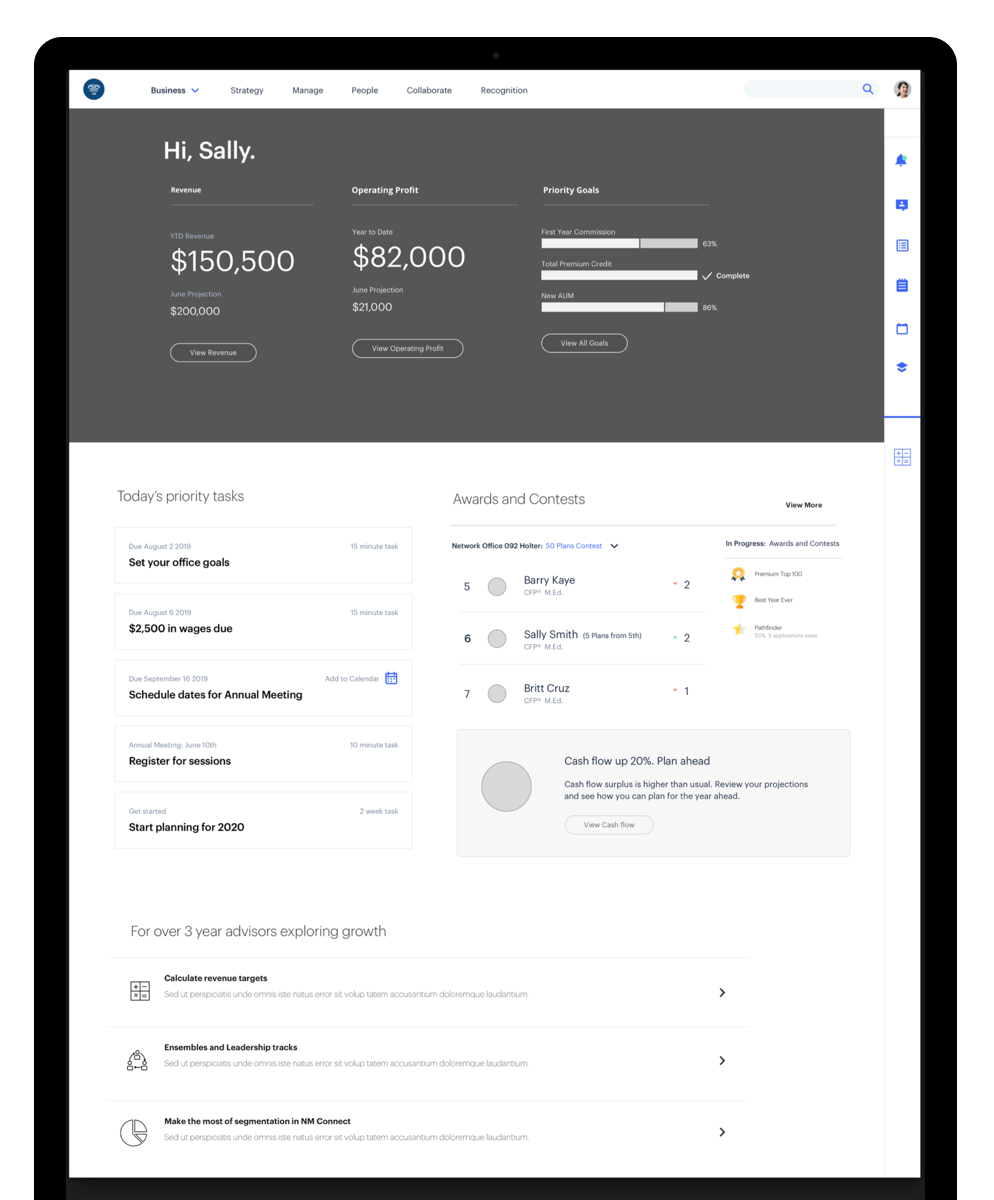
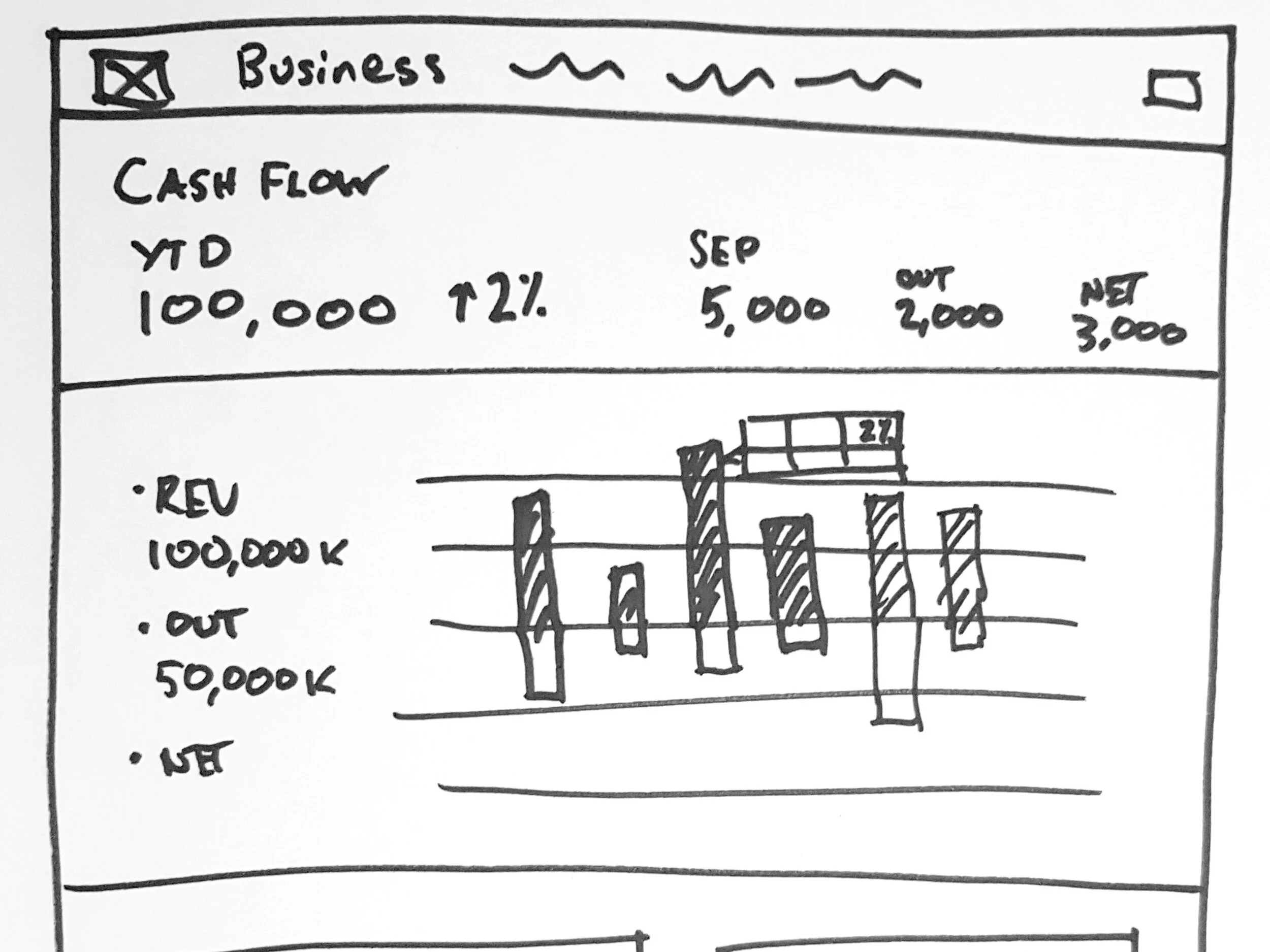
Homepage wireframe. Multiple iterations and rounds of feedback were applied before going into visual design.
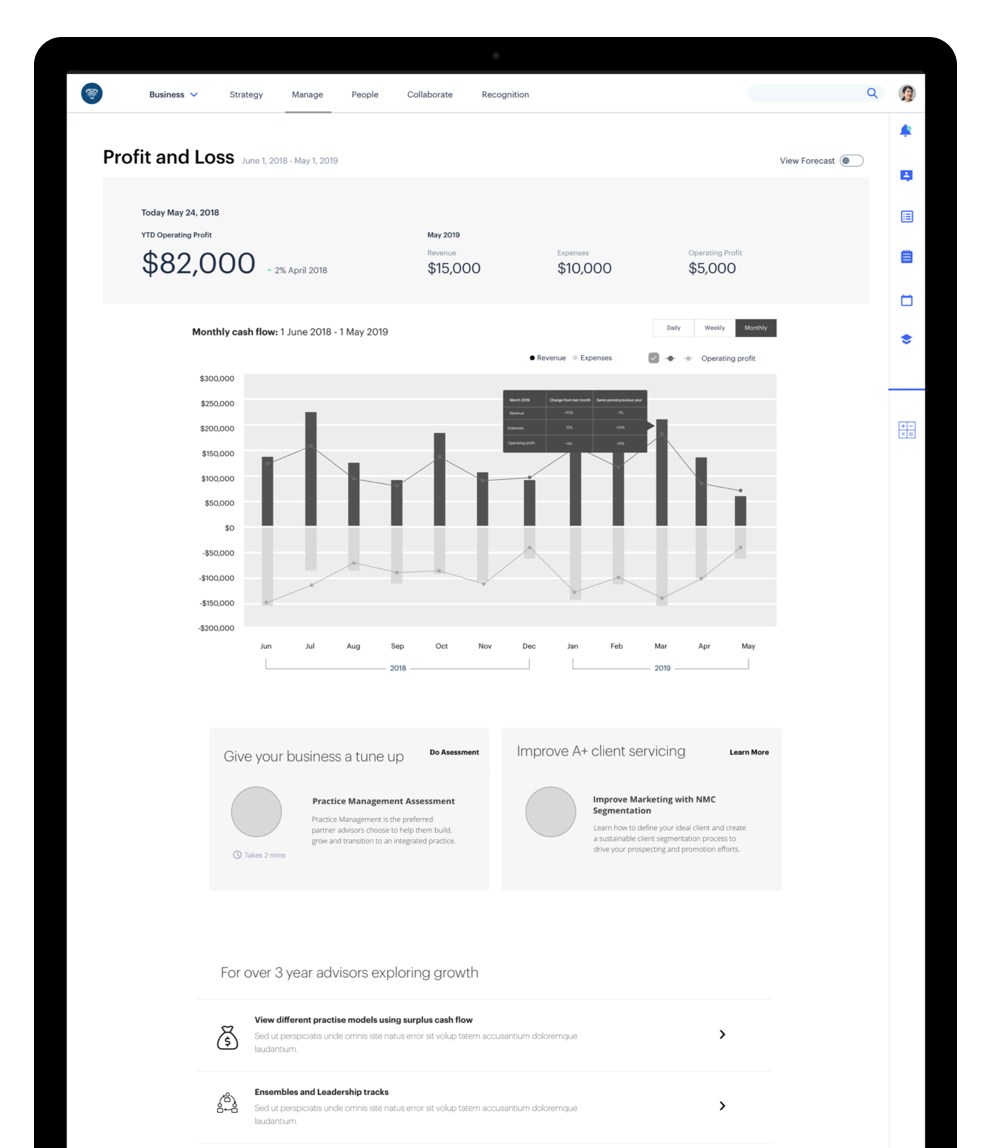
I worked closely with the visual lead making sure experiences and intent were reflected carried through the design process.
TELLING A STORY WITH DESIGN
Creating designs that would represent and resonate with various business units, and of course, its users was important – these vision concepts needed to be a platform for conversations and future initiatives for the business. Using an internal Design System, we leveraged what we could and created new functionality where it made sense in order to solve critical customer and business problems.
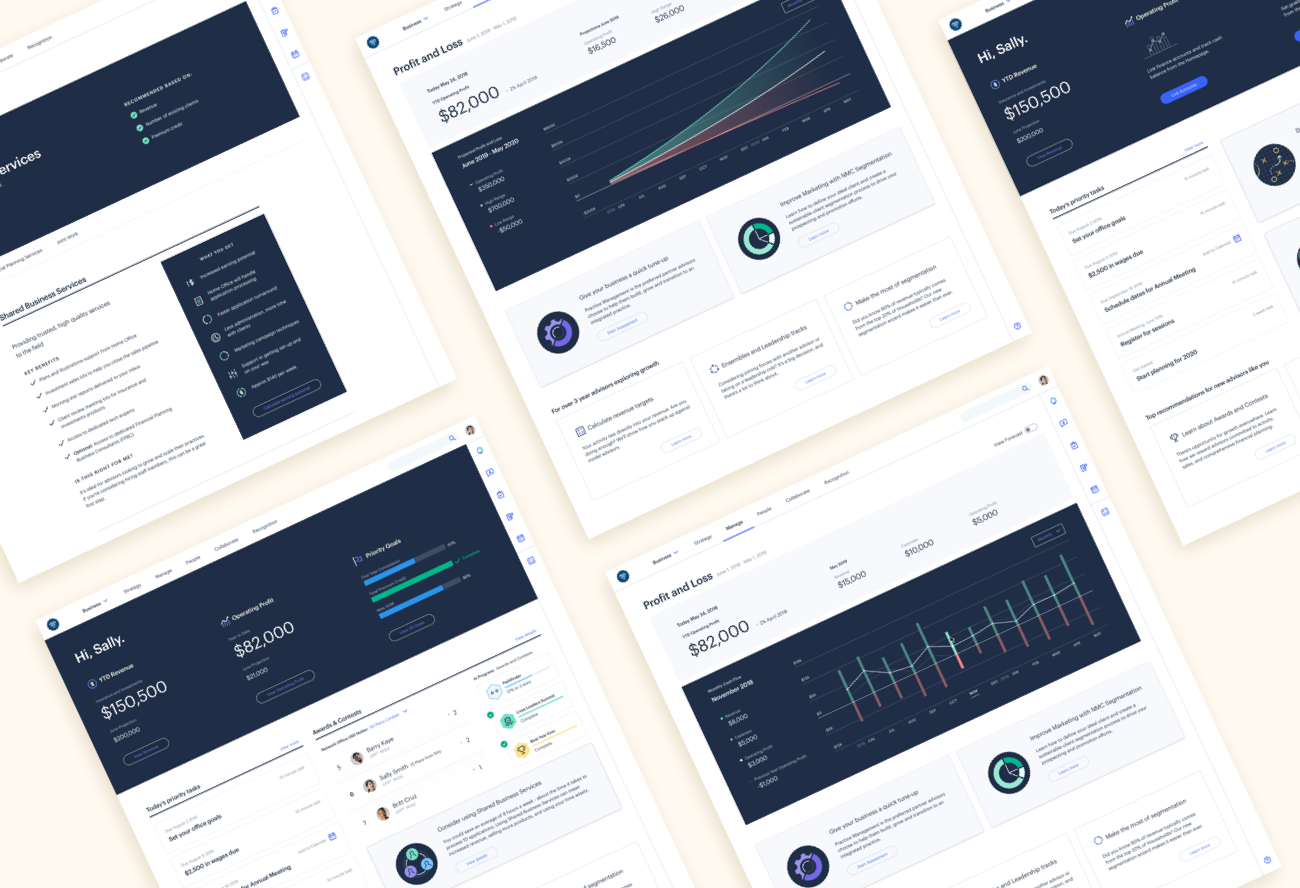
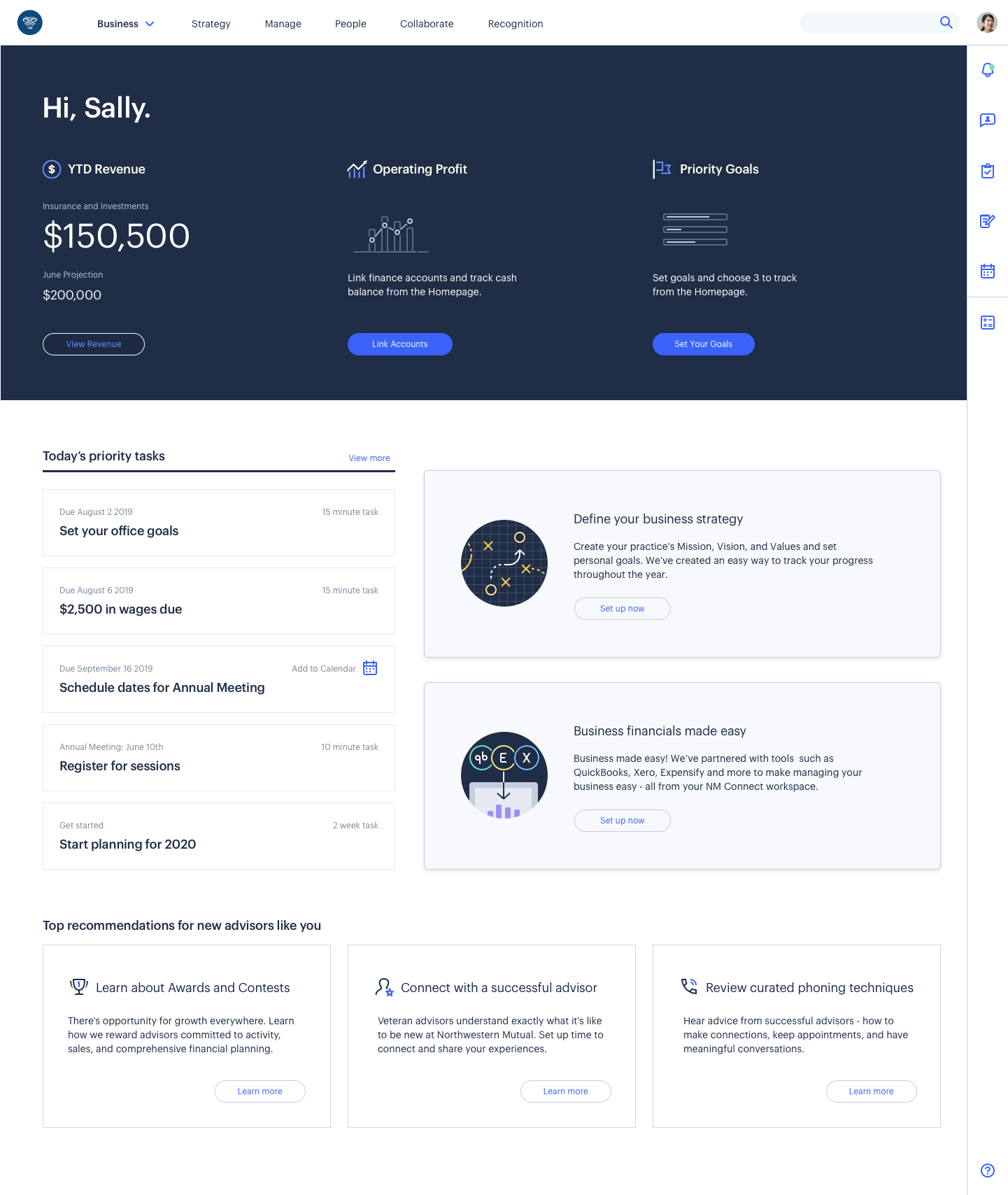
Our vision for NM Business was a centralized digital hub that new recruits and existing field advisors are introduced to on day one. Using guiding principles, it supports the field in running, growing, and managing their practice. It blends in-person and team experiences with flexible learning modules and clear pathways for success. NM Business lives on the same digital platform as all the other tools they will learn on-the-job, such as Learning, Sales and Servicing, and News.
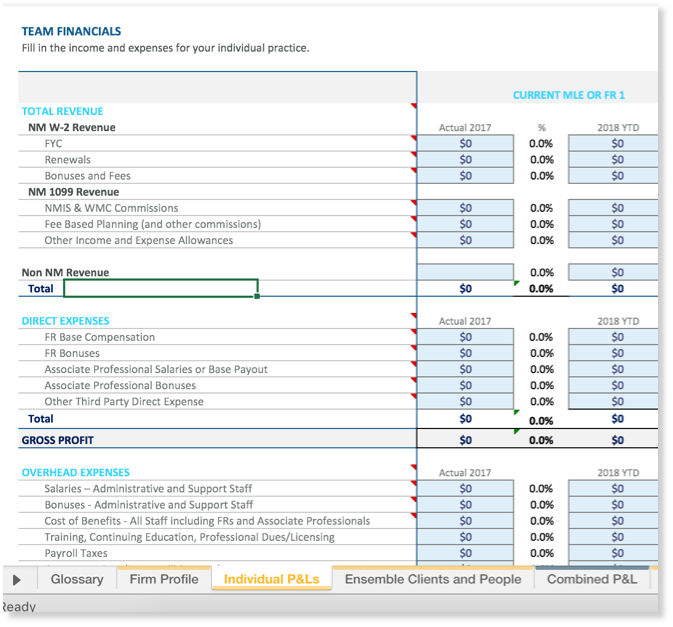
Clear entry points guide the users through linking finance accounts, creating and tracking personal goals, cash flow management, and expense tracking. Previously, this was done through apps, interactive PDFs, random office meet-ups, training binders, workbooks, paper, spreadsheets, and paper.
The MVP included clearly identified tasks that went beyond business management e.g., registering for Awards and Contests, meeting their mentor, and preparing and learning sales techniques. It centralized everything that they were expected to get done ahead of time and enabled the platform to work for them.
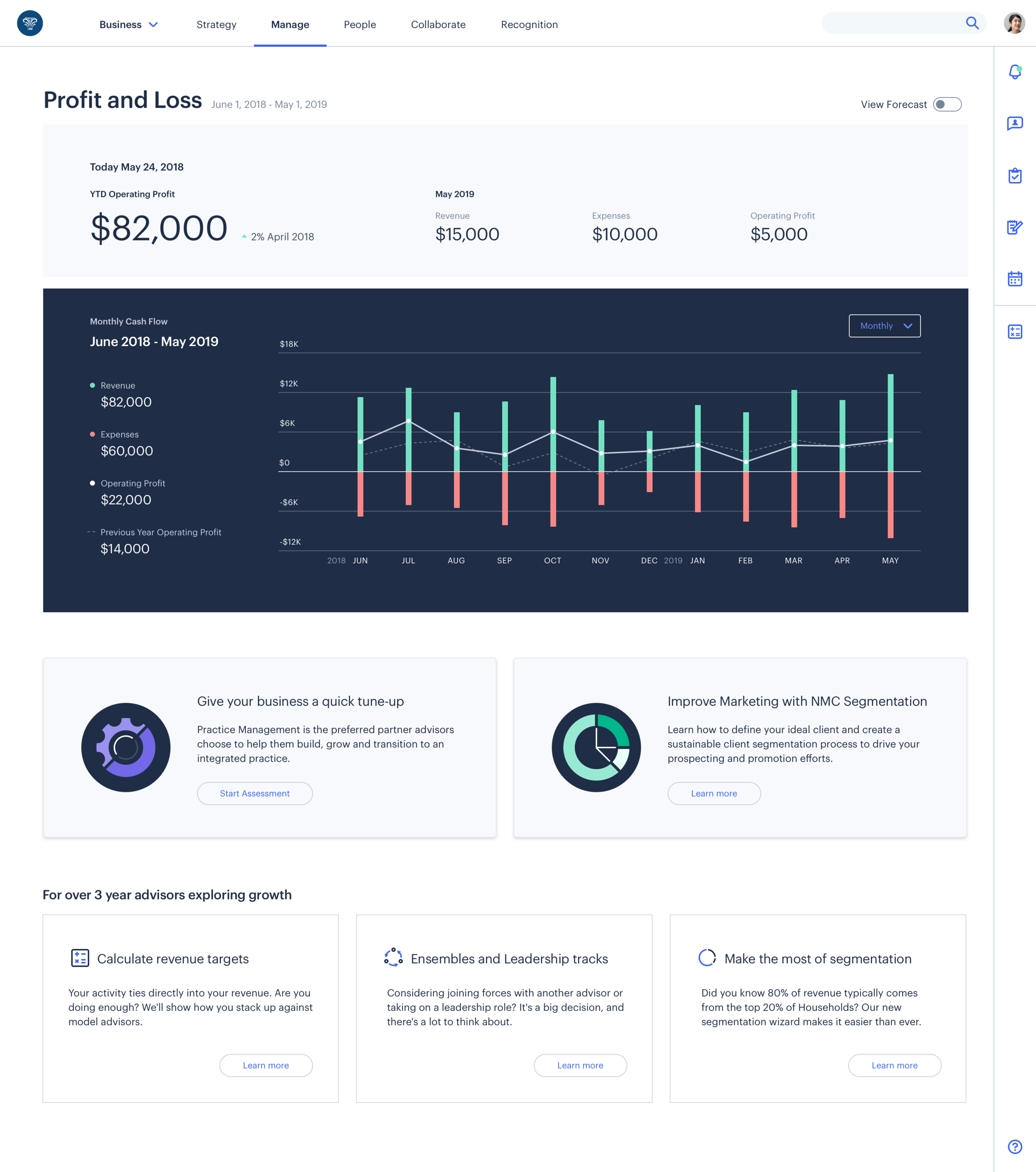
NM Business was more than just a focused digital workspace to track goals and sales; we designed it to be integrated with the complex work expected of representatives. Here, the user is viewing cash flow and expenses. Further down, the platform is adapting based on her experience, prompting her with shared services (provided by HO) and customer segmentation support. Page bottom highlights growth techniques, tools, and tips based on the advisor's platform preferences and tenure.
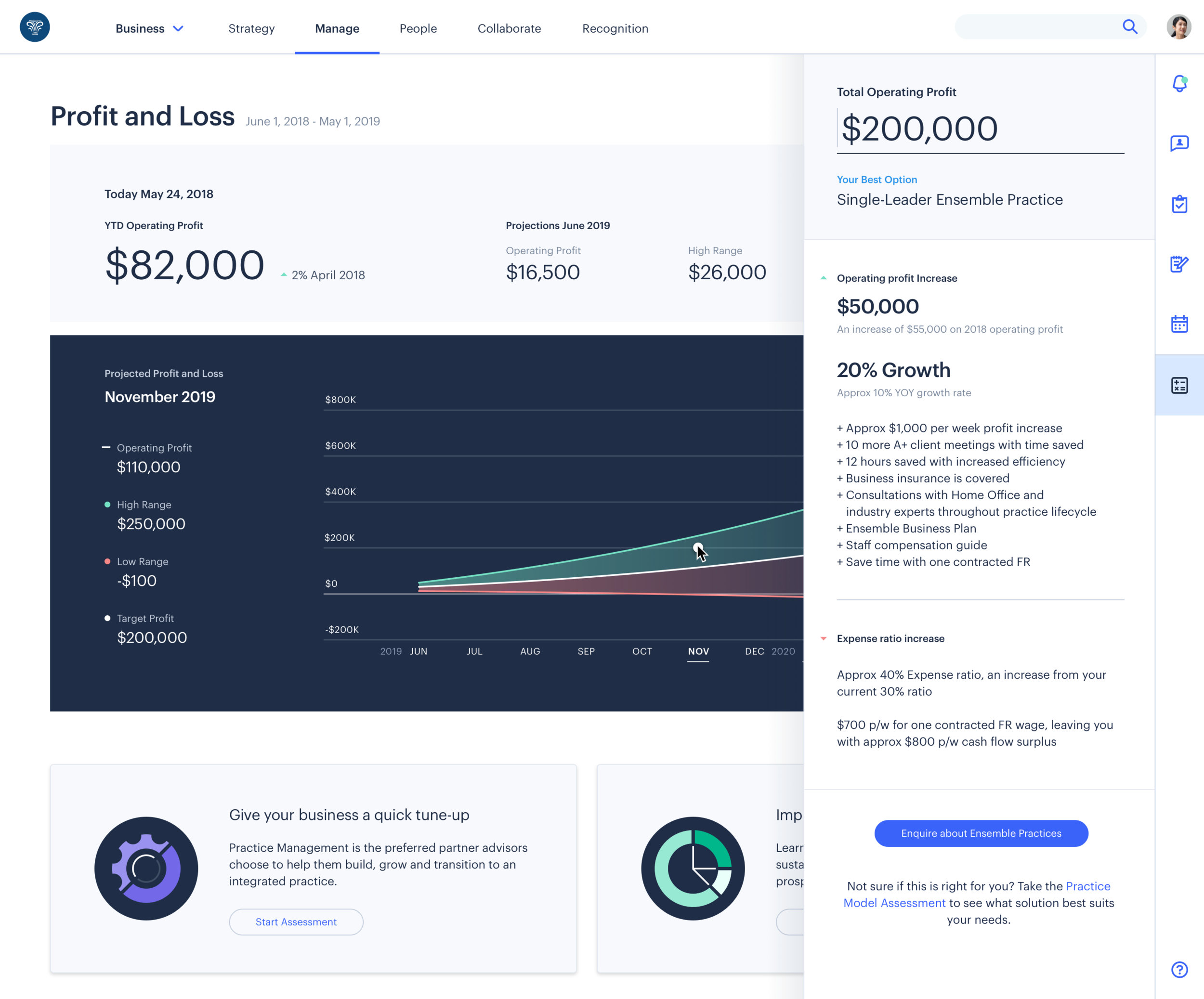
Here, reviewing the projected cash flow of her business, Sally explores different operating profit targets through an interactive chart, supported by relevant practice models to help reach target figures. Practice models are various operational models helping advisors scale and manage their practice.
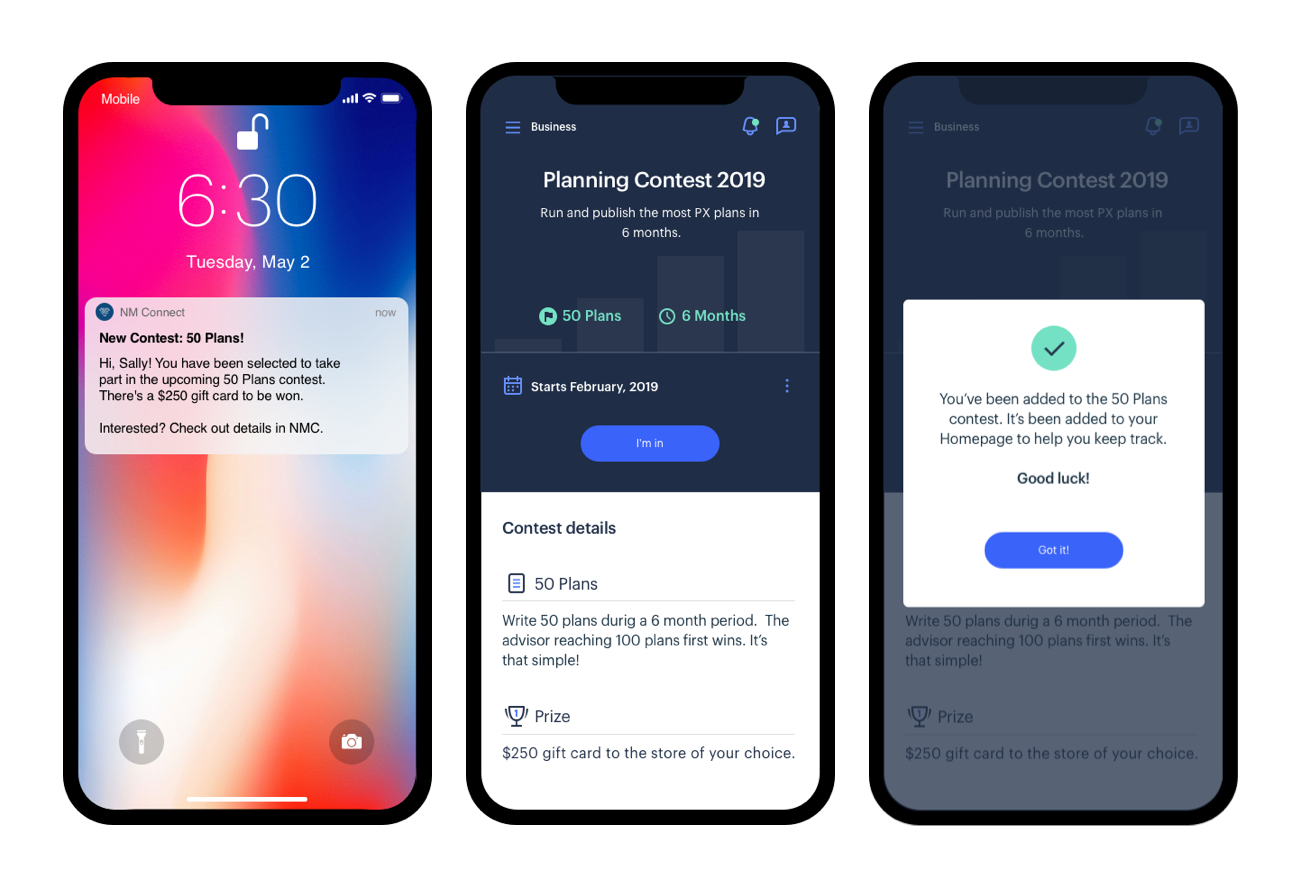
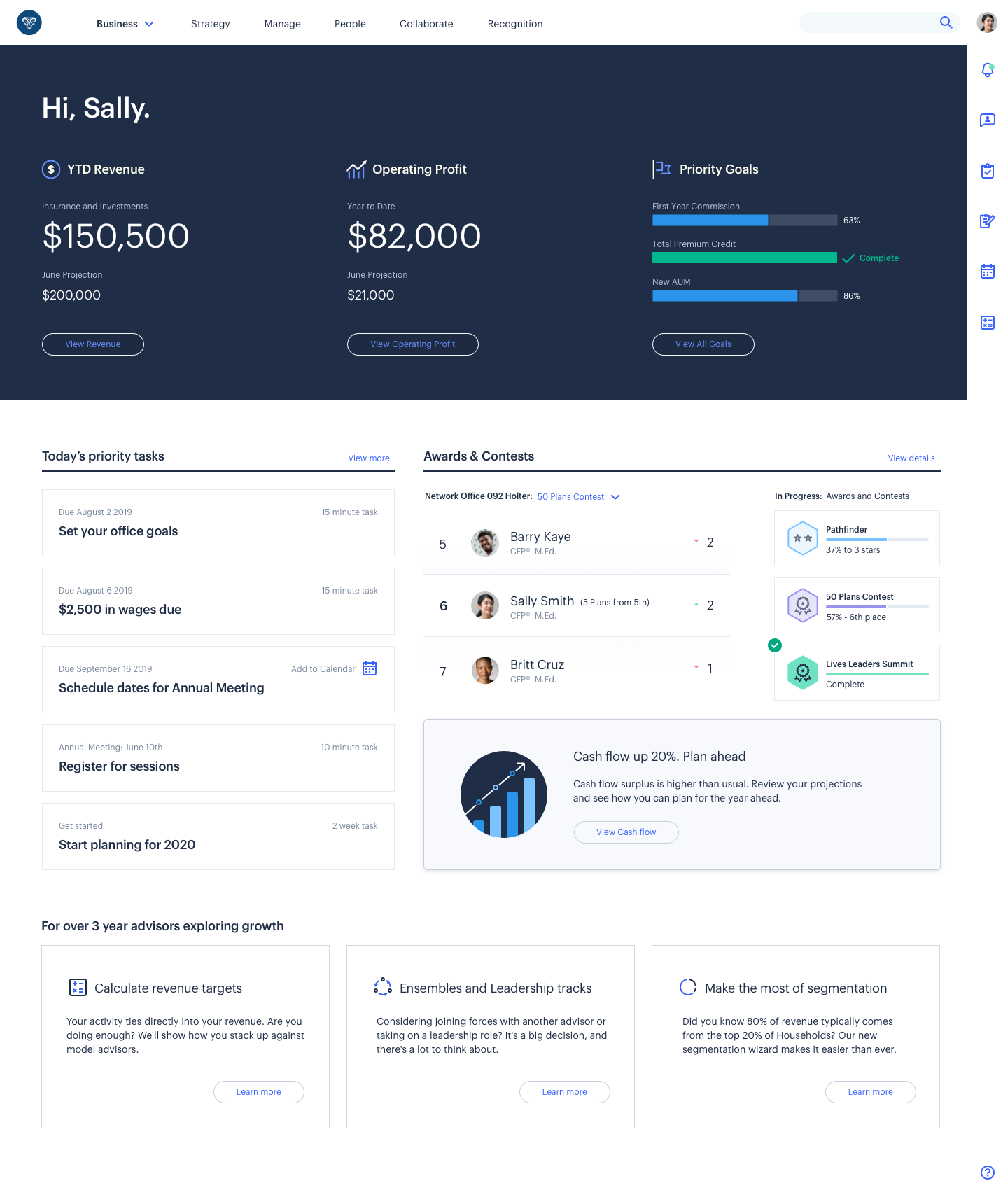
Here, on her Homepage, they can see the ‘Planning 50 contest’ has been added, conveniently prompted on Mobile (above), making it easy to keep on track and view performance against others.
A snapshot of the other Awards and Contests that might in play are also presented, with the ability to drill down to the dedicated Awards and Contests page.
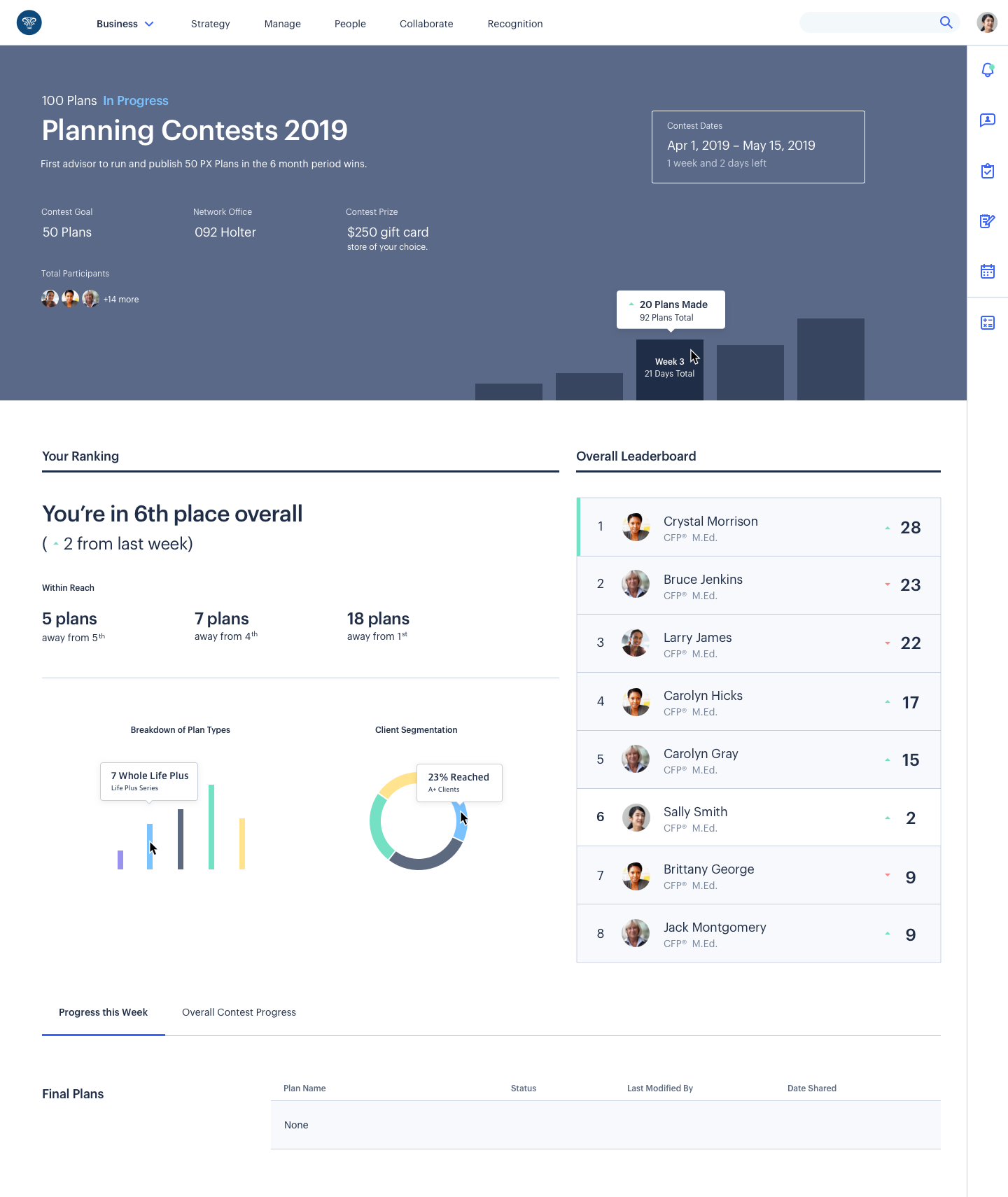
The company's existing tools were focused on solving one pain point and little more, with disparate tools for specific tasks. Here, the integrated Awards and Planning Contests experience helps the representative track and stay motivated to reach individual or contest goals from within the same platform. In time, she will be able to view not just her awards but those of her team.
PRIOR STATE
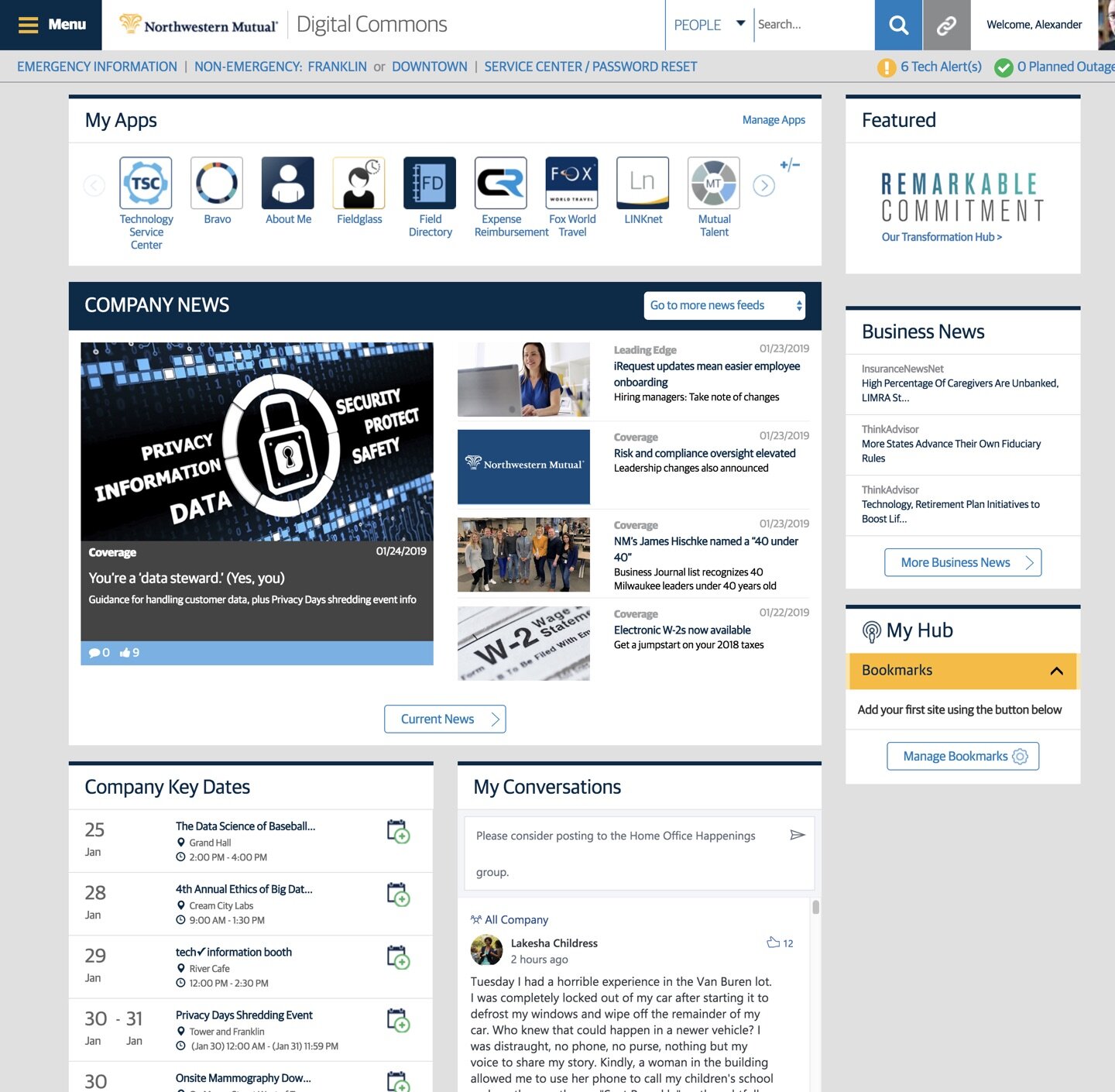
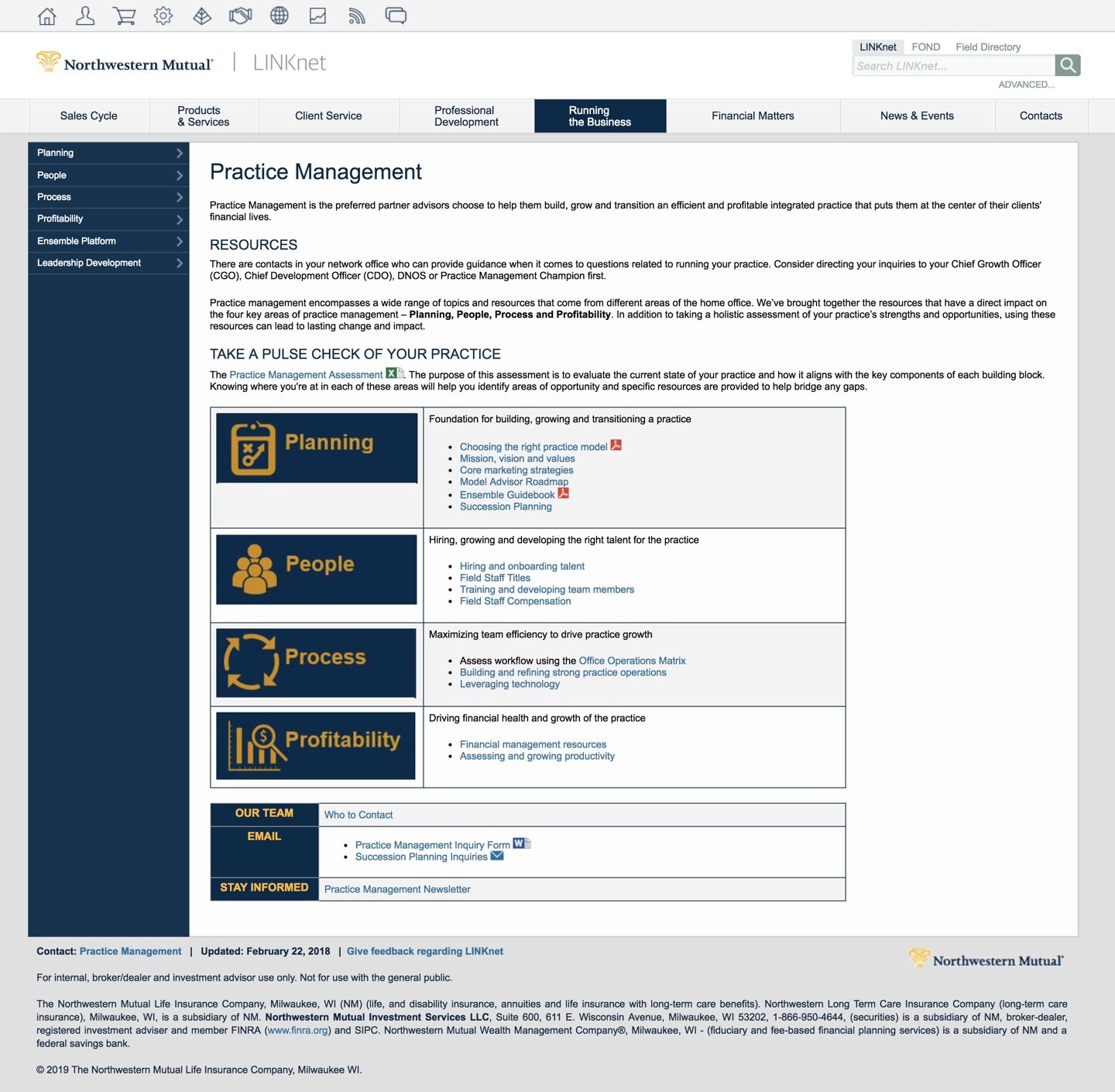
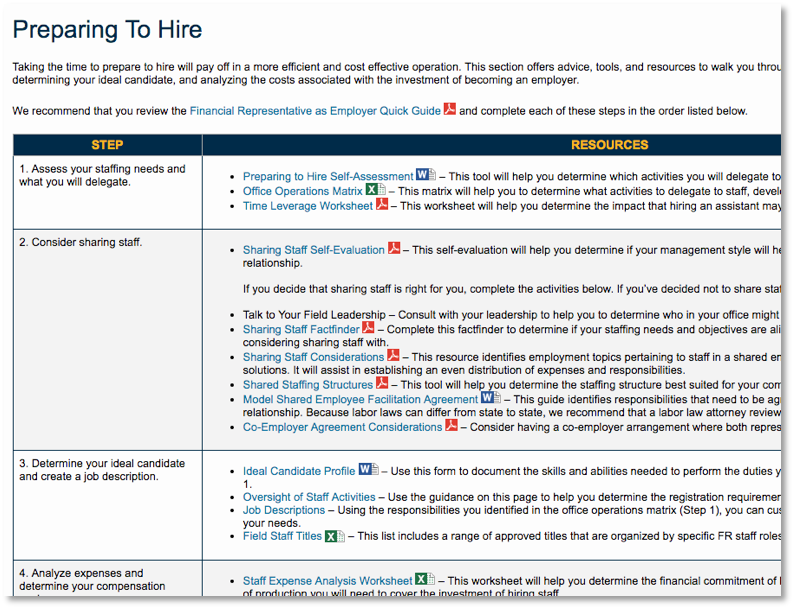
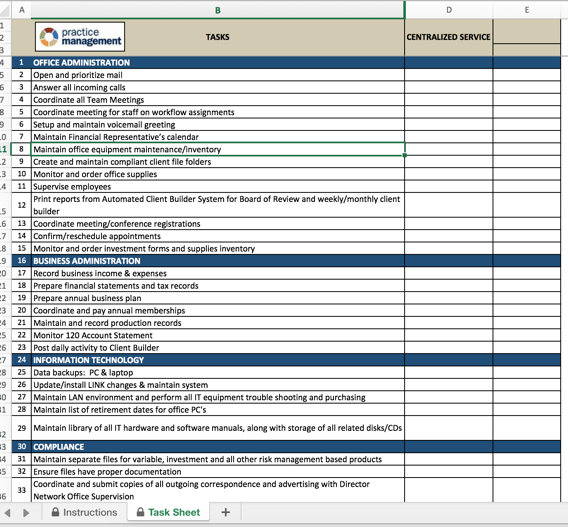
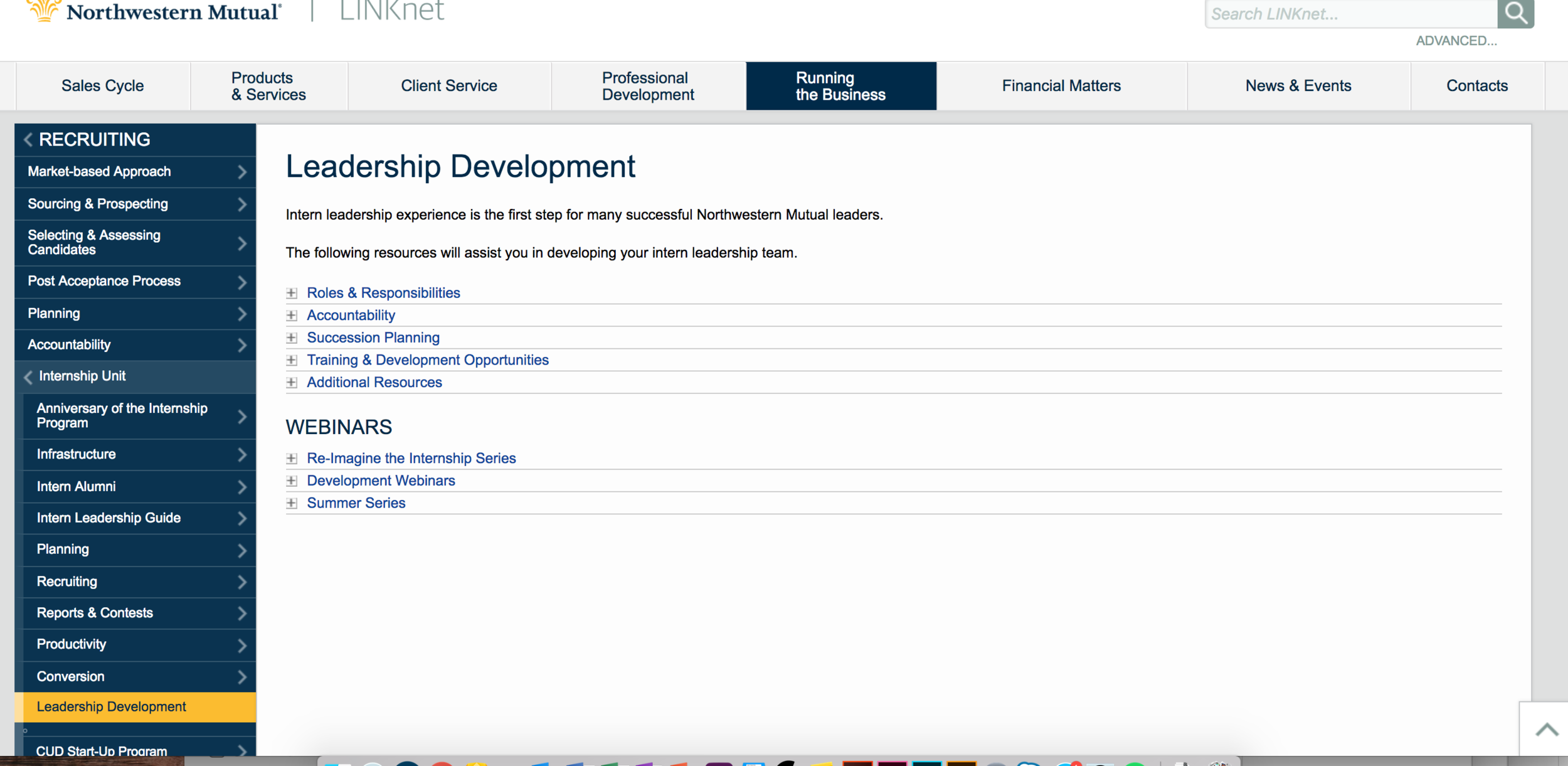
A few of the many knowledge hubs and disparate tools to help advisors grow, manage and run their practice efficiently. Research showed how disconnected these systems and shared services are from the day-to-day operations of the business. Many described not even knowing services were available to help run their practice. No design system, information sprinkled across many apps and pages, clunky, dated, and impossible to find.