
TRANSLATING ORGANIZATIONAL VISION INTO CONCRETE, MEASURABLE, AND MANAGEABLE OUTCOMES.
As our teams all approached the company’s digital transformation goals from different angles, what stood out to us was a lack of clarity as to what “digital transformation” meant, how the strategic goals connected to the projects, and how we might measure success.
In partnership with another design leader, I consolidated the wide variety of visions statements and goals written by different business units and found strategic priorities to be defined in different ways with no targets.
MY ROLE
Organization Design, Design Strategy
THE TEAM
Alex Cheek (co-lead), Phil Robinson (XD)
DIGITAL STRATEGY: VERTICAL MAP
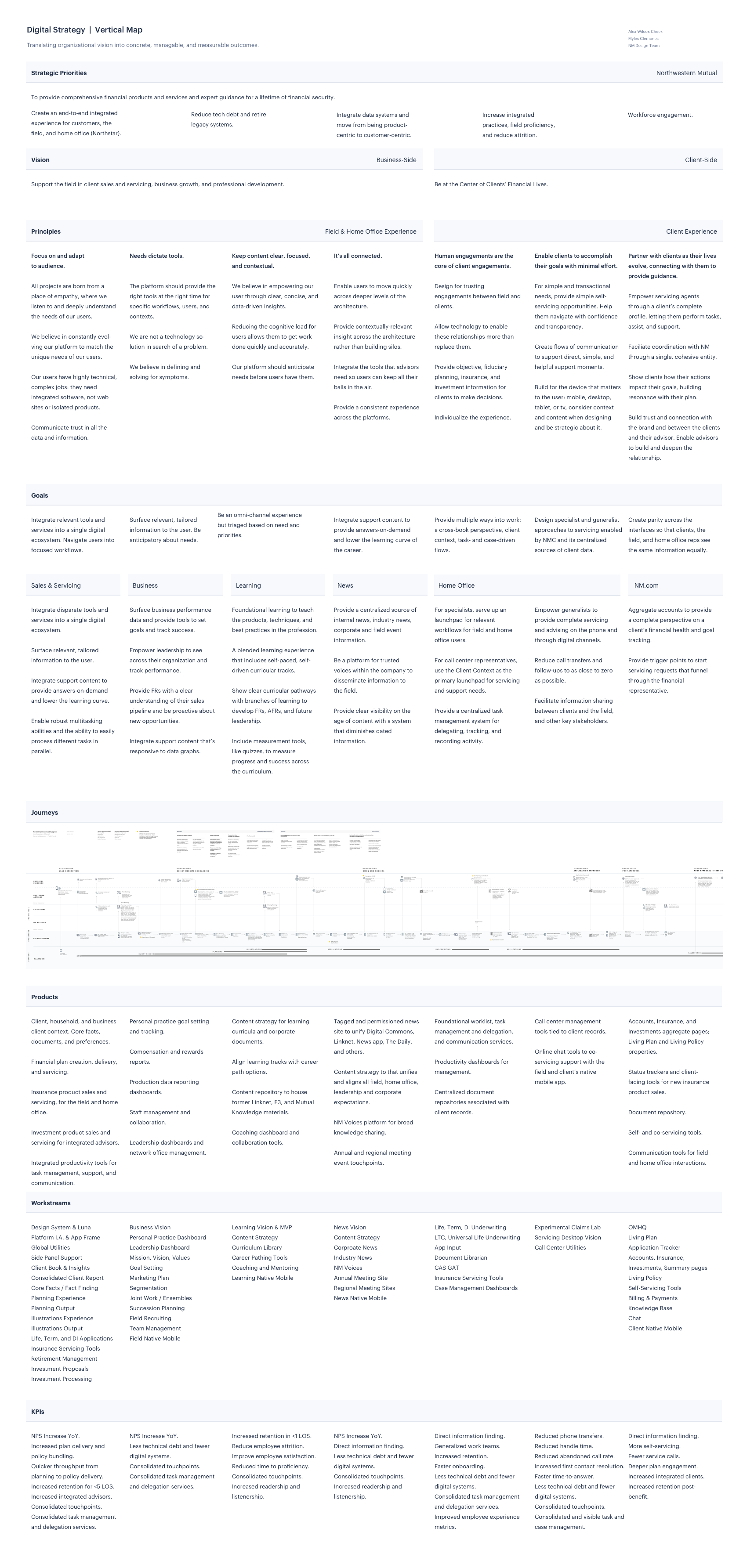
Our alignment map was designed to reflect two primary digital channels: customer-facing and business-facing. It helped created visibility across focused teams and align leadership on the overall direction. Verticality connects the strategic direction with the products; horizontally, journeys help organize teams around the user experiences.
The digital transformation was no small feat: sunsetting hundreds of tools, apps, and antiquated software, rebuilding what was valuable on a single platform, and alleviating the existential challenges faced by the company. We created reasonable targets and mapped them to ground-level work and KPIs.
So many initiatives across the company were not aligned to the corporate strategy: duplicative efforts on different technology, apps being launched to solve one-off problems, teams doing product and design work outside of the product-design organization. The alignment map and platform architecture that I led could quickly identify what work was strategic, what work was misaligned, and how everything connected.